Adult basic CPR (2025 guidelines)
Step-by-step cardiopulmonary resuscitation following the AHA 2025 and ERC guidelines.
First aid guide: it does not replace medical care or hands-on training. In an emergency, call 112 first.
When
The person is unresponsive and not breathing normally (or only gasping: "agonal breathing"). Don't waste time feeling for a pulse: it isn't reliable unless you're a professional.
Step by step
-
Check the scene is safe
-
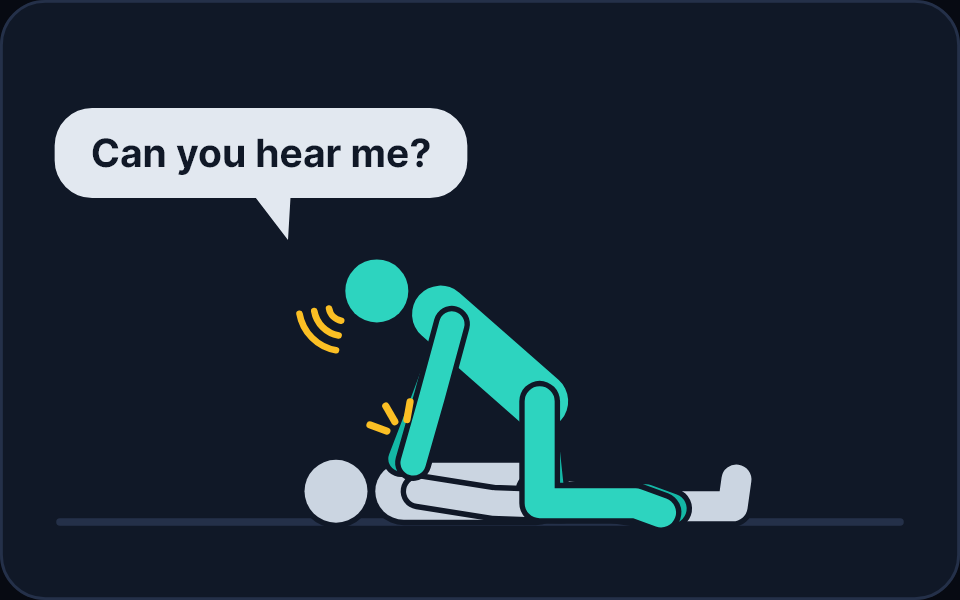
Speak loudly to them and tap their shoulders
-
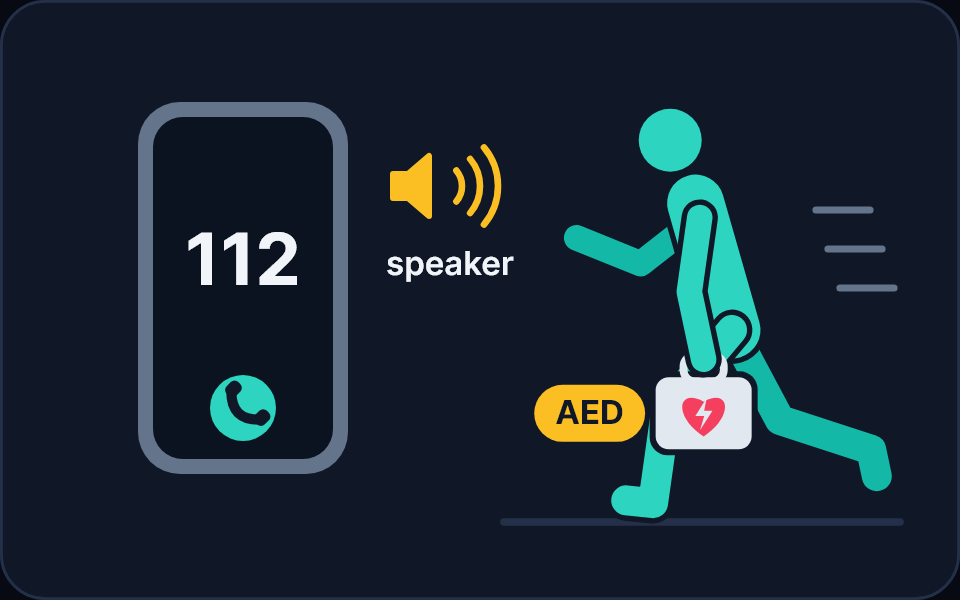
If there's no response: get someone to call 112 (on speakerphone) and fetch an AED (defibrillator). If you're alone, make the call yourself on speaker
-
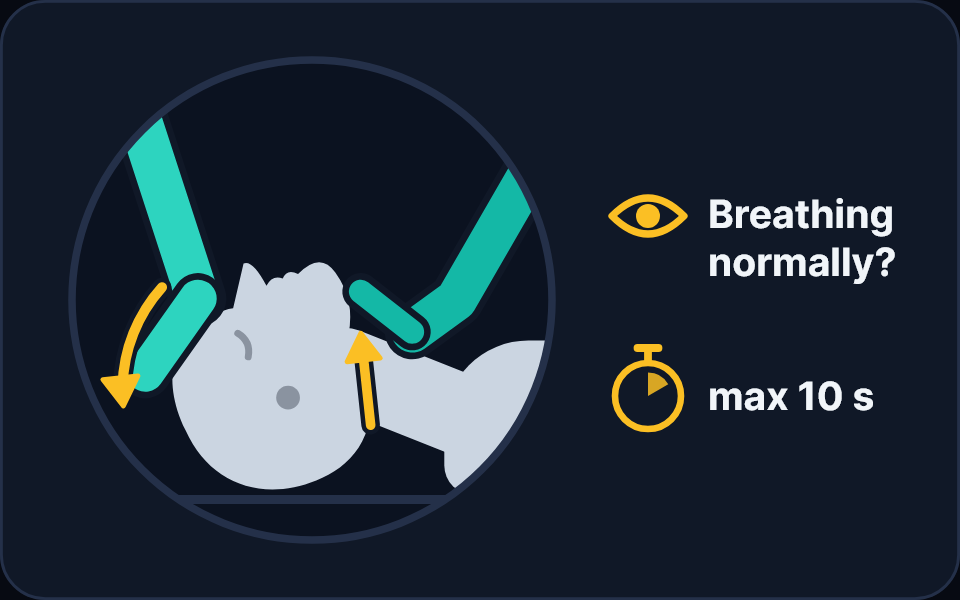
Open the airway (tilt the head back and lift the chin) and look for normal breathing for no more than 10 seconds
-
Compressions:
-
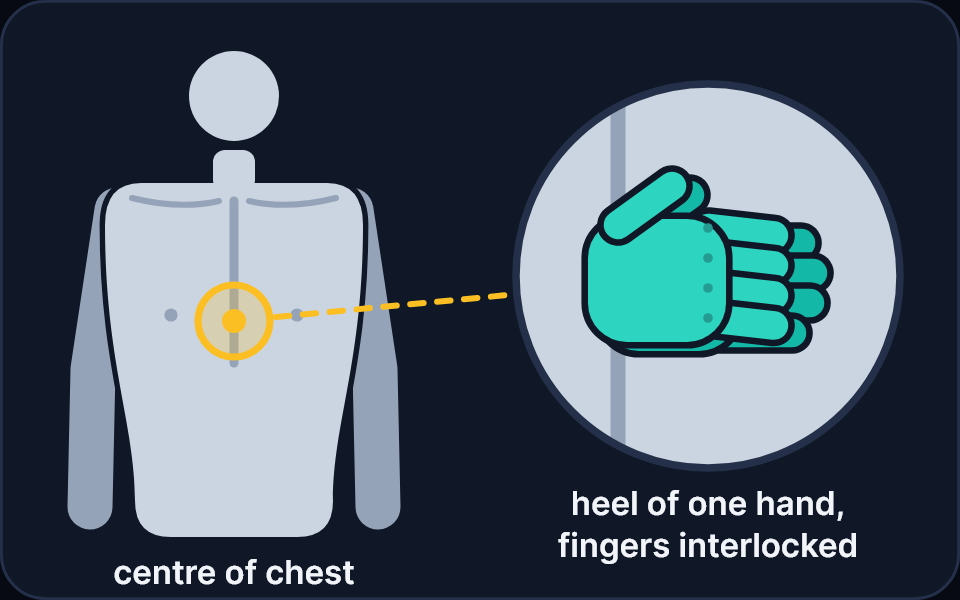
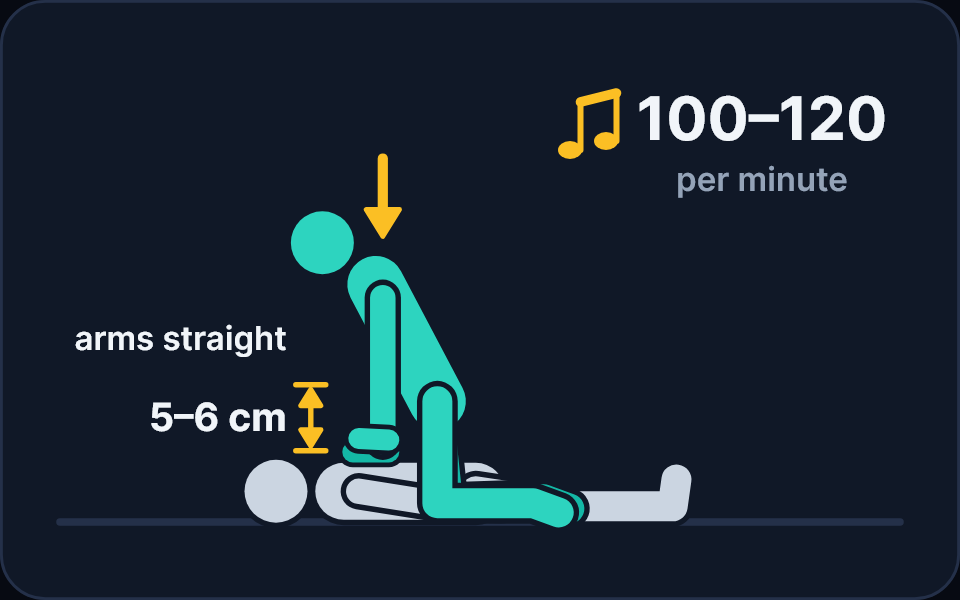
Heel of one hand in the centre of the chest, the other on top, fingers interlocked
-
Arms straight, use your body weight
-
Depth 5-6 cm, rate 100-120 a minute (the beat of "Stayin' Alive")
-
Let the chest come all the way back up between compressions
-
-
Rescue breaths (if you're trained): 30 compressions then 2 breaths of 1 second each, watching the chest rise. If you're not trained or don't want to, do compressions only, without stopping
-
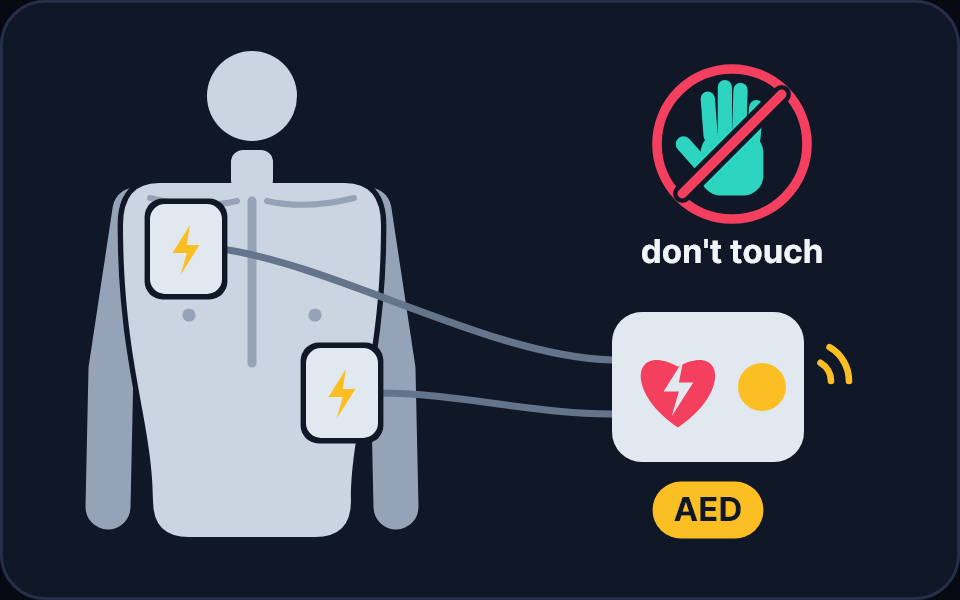
AED: switch it on as soon as it arrives and follow its voice prompts; nobody touches the person while it analyses or delivers a shock. Restart compressions straight after each analysis or shock
-
If someone else is there, swap every 2 minutes
-
Keep going until help arrives, the person starts breathing normally or you can't go on
C-A-B
Compressions → Airway → Breathing
Warning
Warnings
- It's normal to feel cracking (ribs): don't stop
- Imperfect CPR is far better than none
- Neck injury: if you suspect one, open the airway with a jaw thrust if you know how; if you can't get breaths in, use head tilt–chin lift: breathing is the priority
- Drowning and children: rescue breaths are very important; if you know how, start with 5 breaths
- Children: press down a third of the depth of the chest (about 5 cm) with one or two hands
- Babies (under 1 year): press down about 4 cm with both thumbs, hands encircling the chest, or with the heel of one hand (the 2025 guidelines no longer recommend the two-finger technique)
- A hands-on CPR course is the best preparation