Controlling severe bleeding
How to stop life-threatening bleeding: direct pressure, wound packing and a tourniquet.
First aid guide: it does not replace medical care or hands-on training. In an emergency, call 112 first.
Massive bleeding is the leading cause of preventable death in injured people. Deal with it first.
First of all
- Make sure the scene is safe and, if you can, put on gloves
- Get someone to call 112 now
Step 1: Direct pressure
-
Use the cleanest material you have (gauze, cloth, clothing)
-
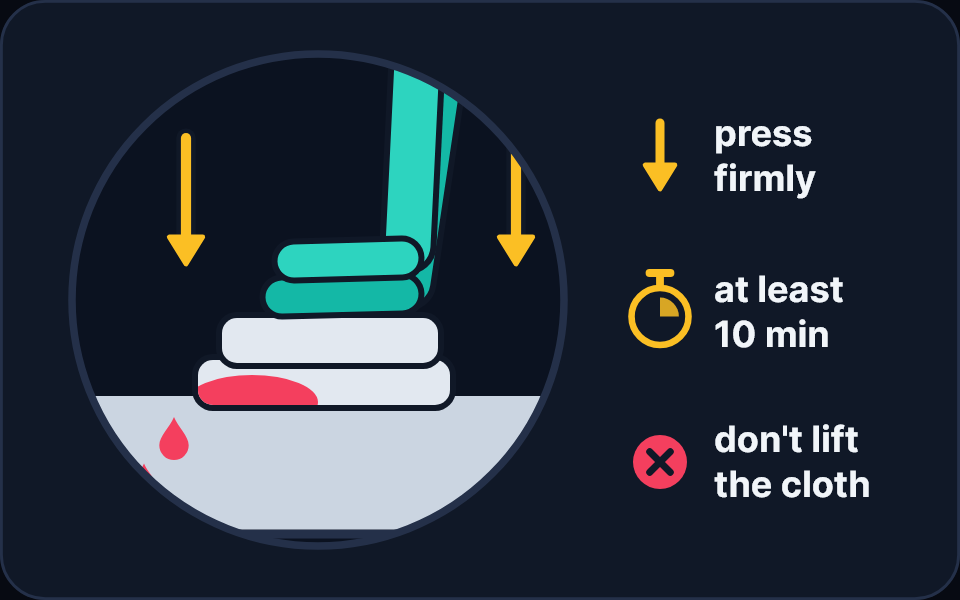
Press FIRMLY and without stopping directly on the bleeding point
-
Don't lift it to look: if it soaks through, add more cloth on top without removing the first layer
-
Keep up the pressure for at least 10 minutes (3 minutes if you're using haemostatic gauze)
-
Once it stops, bandage firmly without cutting off the circulation
Step 2: Pack the wound (armpit, groin, neck or deep limb wounds)
-
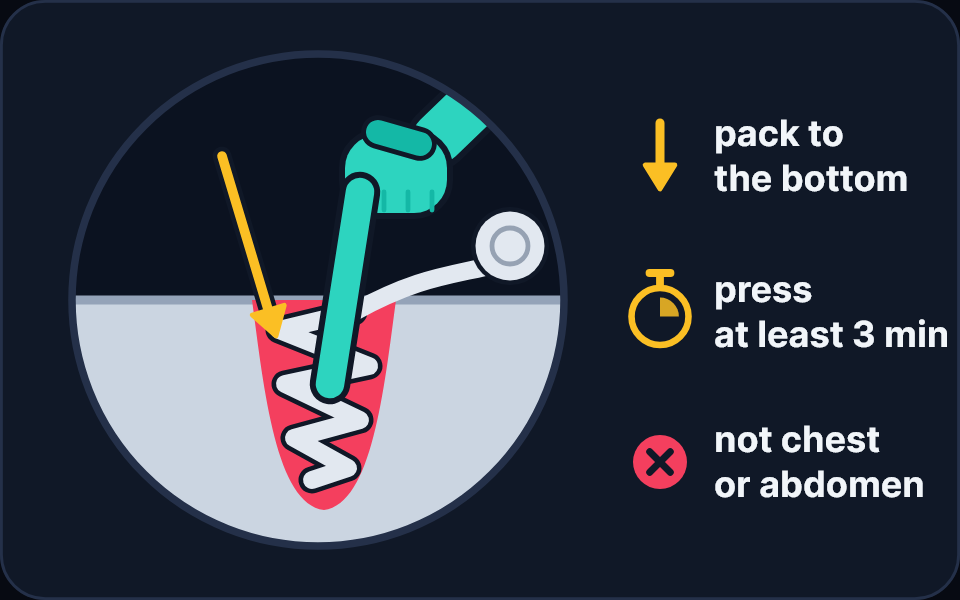
Where a tourniquet can't be used, pack the wound with gauze (haemostatic if you have it), pushing it right in, then press hard on top for at least 3 minutes
-
Do NOT pack chest or abdominal wounds: press on the surface and wait for the ambulance
-
On the neck, never bandage all the way round
Step 3: Tourniquet (arms and legs only)
When: life-threatening bleeding from an arm or leg (spurting, pooling, soaking through clothing, amputation) or bleeding that direct pressure doesn't stop.
How:
-
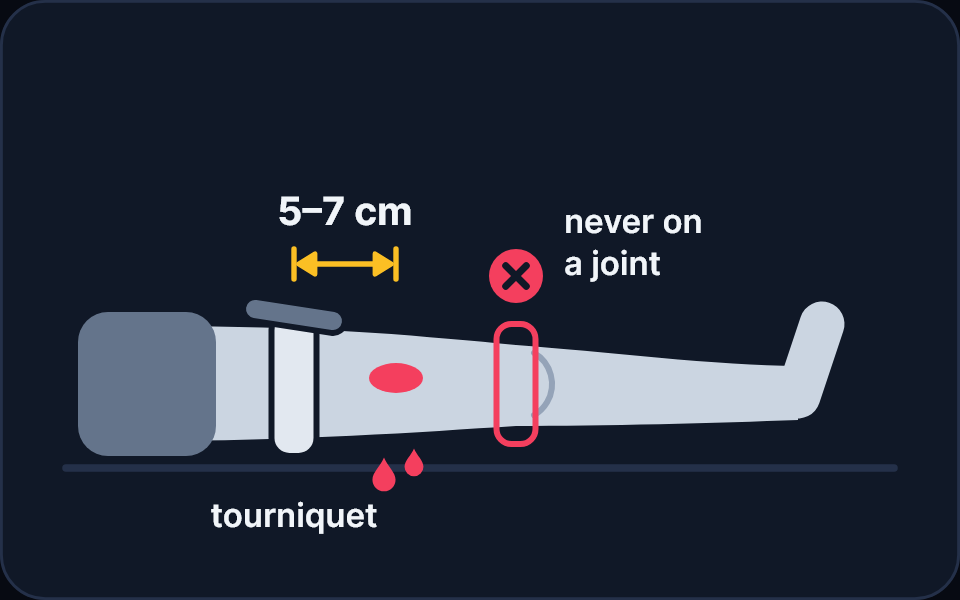
Place it 5-7 cm above the wound, never over a joint (if you can't see the wound clearly, as high up the limb as possible)
-
Use a commercial tourniquet (such as a CAT or SOFTT-W) or an improvised one
-
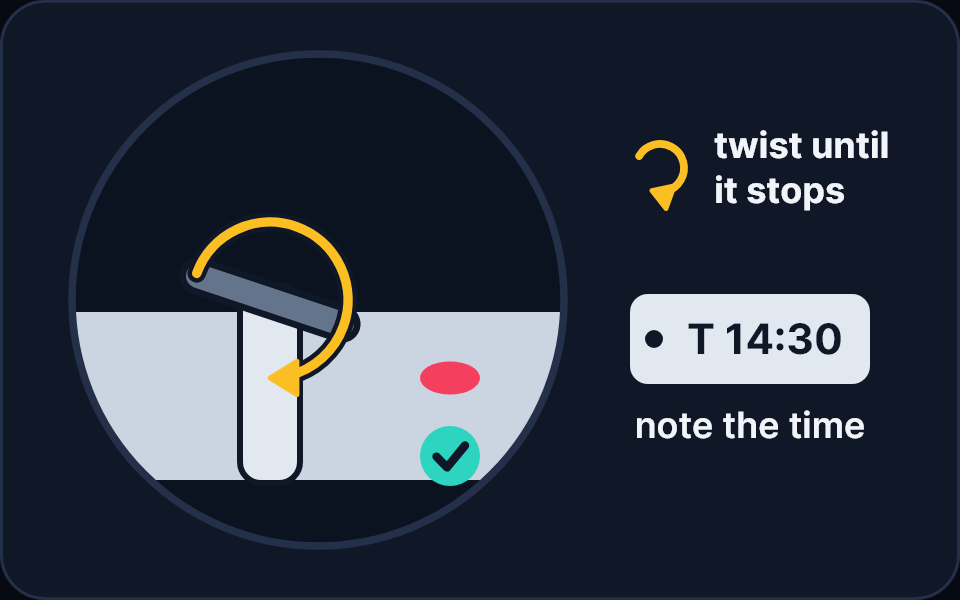
Tighten until the bleeding stops. It hurts a lot: that's normal
-
Write the time on the tourniquet or on the forehead ("T" + time)
-
If it's still bleeding, apply a second tourniquet above the first
-
Never loosen or remove it: only medical staff should do that
Improvised tourniquet
- A wide strip of cloth (4-5 cm or more): tie, triangular bandage, sleeve
- Tie a knot, put a stick on top as a windlass, twist until the bleeding stops and secure the stick
- NEVER use cables, cords, wire or cable ties: they cut into the skin and don't stop the bleeding. A belt on its own, without a windlass, is almost never enough
Warning
Warnings
- For up to about 2 hours the risk of damage from the tourniquet is low; after that it rises. Even so, loosening it is a decision for medical staff only: a tourniquet applied in time saves lives
- Internal bleeding can't be treated on the spot: if after a blow there is abdominal pain, cold pale skin or confusion, it's an emergency; call 112
- Keep the casualty warm: cold makes bleeding worse