Choking in adults, children and babies
How to recognise a severe airway obstruction and clear it with back blows and thrusts, depending on age.
First aid guide: it does not replace medical care or hands-on training. In an emergency, call 112 first.
If the person can't speak, cough or breathe, get someone to call 112 (on speaker) and act now.
Recognise it
-
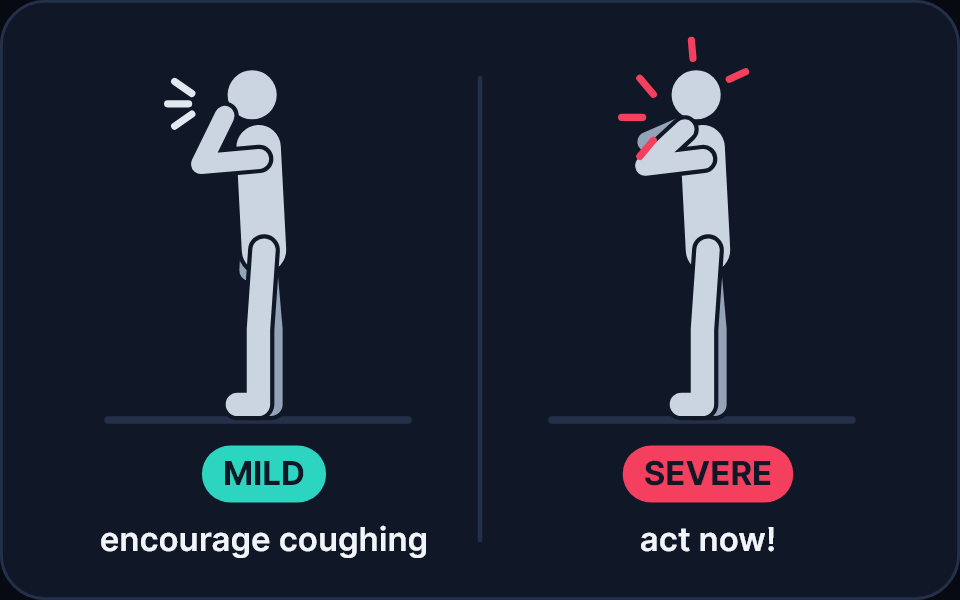
Mild: they're coughing, talking and breathing → encourage them to keep coughing hard and stay with them. Don't hit them on the back or give them water
-
Severe: they can't speak or cough forcefully, clutch their throat, make high-pitched noises or turn blue → act immediately
Adults and children over 1 year
-
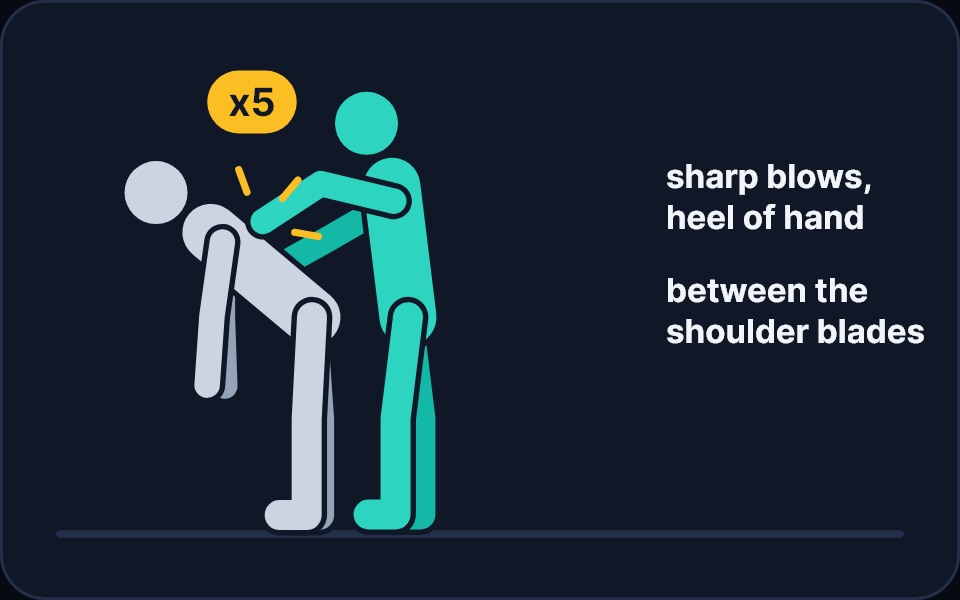
Stand to the side and slightly behind them. Lean them forward, supporting their chest with one hand
-
Give 5 sharp back blows between the shoulder blades with the heel of your other hand
-
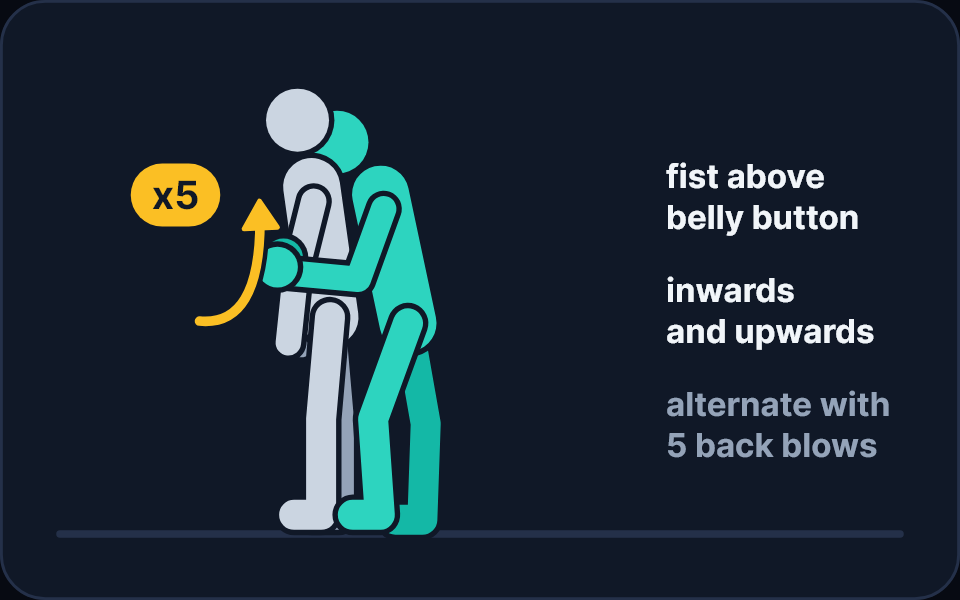
If it doesn't come out: give 5 abdominal thrusts (Heimlich manoeuvre). Stand behind them, put your arms around their waist, place a clenched fist between the belly button and the bottom of the breastbone, cover it with your other hand and pull sharply inwards and upwards
-
Alternate 5 back blows and 5 thrusts until the object comes out or they become unconscious
- With a child, kneel down to their height
Pregnant women and people with severe obesity
If you can't get your arms around their abdomen, give chest thrusts: fist on the lower half of the breastbone and pull sharply backwards. Alternate with back blows.
Babies under 1 year
-
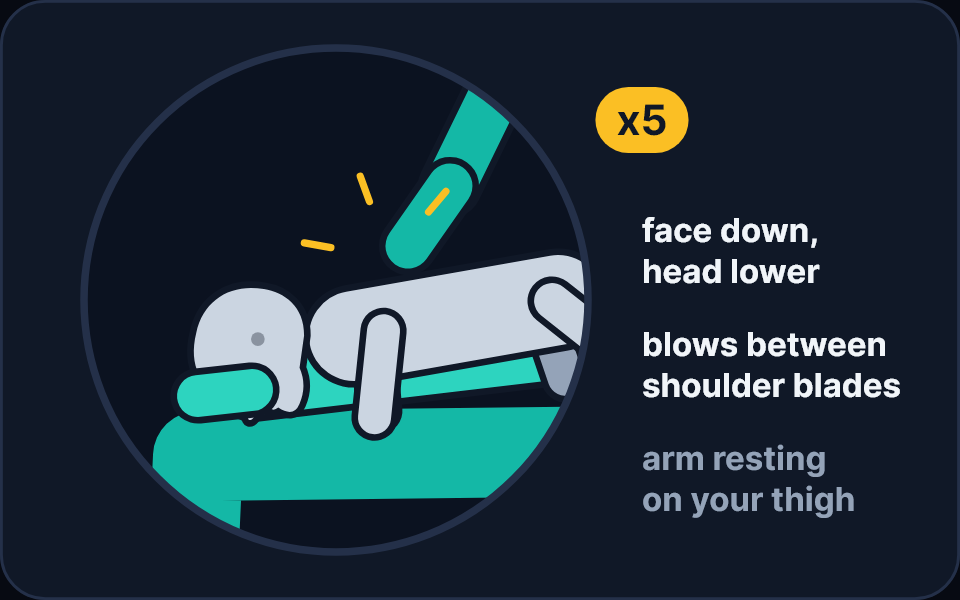
Lay the baby face down along your forearm, with the head lower than the chest. Support the jaw with your hand (without squeezing the throat) and rest your arm on your thigh
-
Give 5 back blows between the shoulder blades with the heel of your hand
-
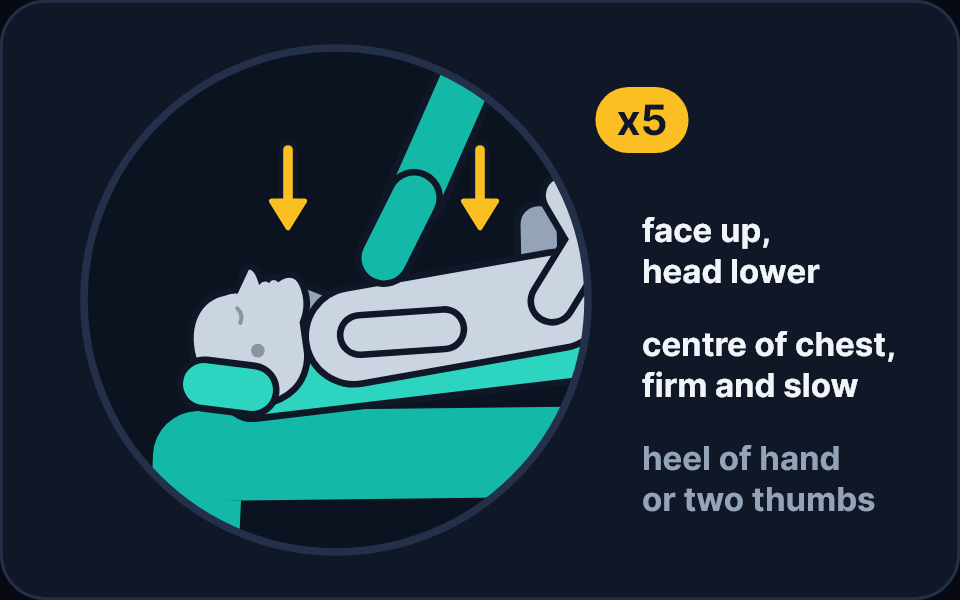
Turn the baby face up onto your other forearm, with the head lower
-
Give 5 chest thrusts: in the centre of the chest, just below the nipple line, with the heel of one hand or both thumbs (as in baby CPR; the 2025 guidelines no longer recommend the two-finger technique), firm and slower than in CPR
-
Keep alternating 5 and 5 until the object comes out or the baby stops responding
- Never give abdominal thrusts to a baby
If they become unconscious
- Lay them on the floor and check that someone has called 112
- Start CPR with chest compressions: they also help to dislodge the object
- Each time you're about to give rescue breaths, look in the mouth: only remove the object if you can see it and grab it. Don't do blind finger sweeps
Preventing choking in children
- Until the age of 4-5, cut grapes, sausages and cherry tomatoes lengthways into small pieces
- Don't give them peanuts, hard sweets, popcorn or chewing gum
- Make sure they eat sitting down, not running around; keep small objects, balloons, magnets and button batteries out of reach
Warning
Warnings
- After abdominal or chest thrusts, the person must be checked by a doctor even if they feel fine
- Don't give water, bread or anything else to "push down" the object
- If you're alone and choking: call 112 if you can and give yourself abdominal thrusts with your fist, or by pushing your abdomen hard against the back of a chair
- An in-person first aid course is the best preparation